
◆ Save $500 on Invisalign
Includes our 3-year results guarantee with 2 rounds of refinements
We work with CareCredit to make treatment affordable. Apply in minutes with no hard credit pull.
Missing teeth affect more than how you chew — they change how you feel about your smile, how you show up in conversations, and how confident you feel in everyday moments. At White Pine Family Dental, we’ve been helping Reno families reclaim that confidence for over 30 years. Dental implants are the most permanent, natural-feeling tooth replacement available, and our team places them with the precision and personalized care you’d expect from a practice that genuinely knows its patients.
Unlike dentures or bridges, implants replace the tooth root itself — preserving your jawbone, protecting neighboring teeth, and giving you results that look, feel, and function just like the real thing. If you’ve been living with one or more missing teeth, now is the time to find out if dental implants in Reno, NV are right for you.
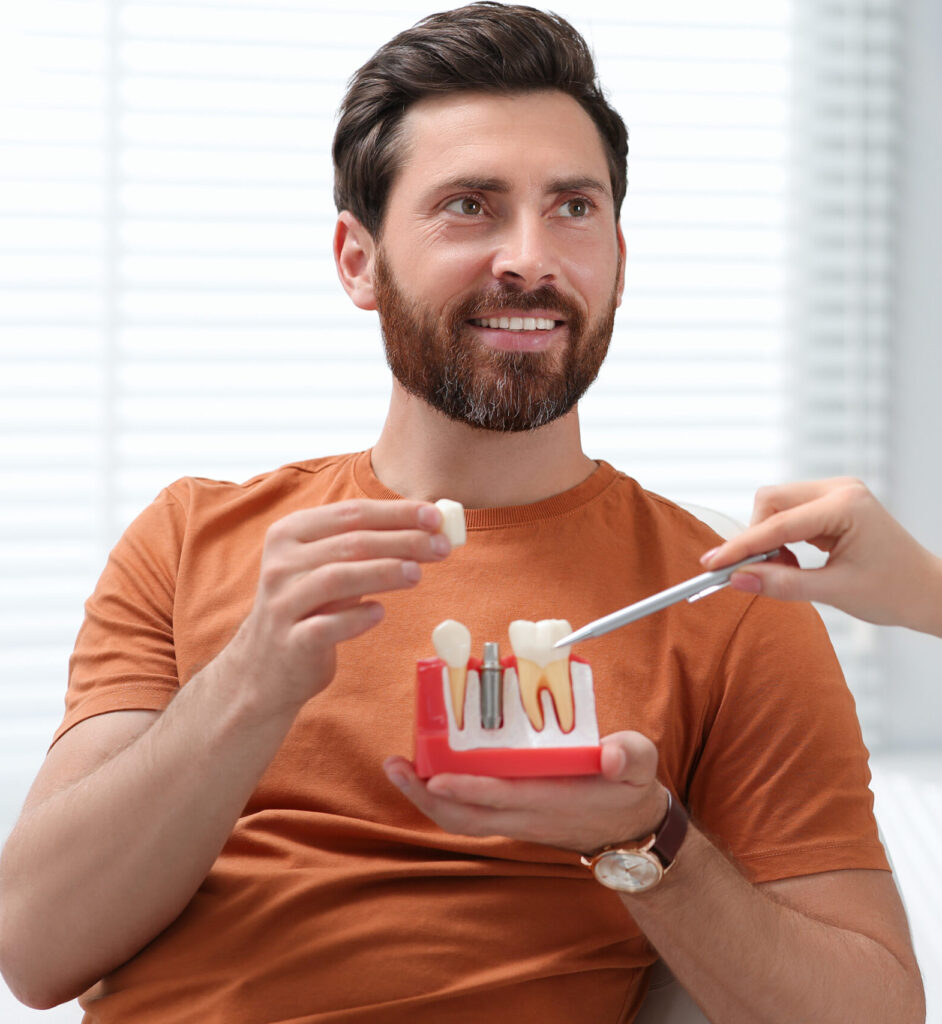
A dental implant is a small titanium post — roughly the size of a tooth root — surgically placed into your jawbone. Once it fuses with the bone (a process called osseointegration), an abutment connects the post to a custom-made porcelain crown that matches your natural teeth. The result is a three-part restoration: post, abutment, and crown, that replicates the look, feel, and function of a real tooth at the root level.
Titanium is uniquely biocompatible, meaning your body accepts it without rejection. With proper care, the implant post can last a lifetime — and dental implants carry a 95–97% success rate in healthy patients. No other tooth replacement option comes close to matching that level of durability and long-term performance.
Implants can replace a single missing tooth, multiple teeth, or support a full arch — making them versatile enough for nearly any tooth loss situation.
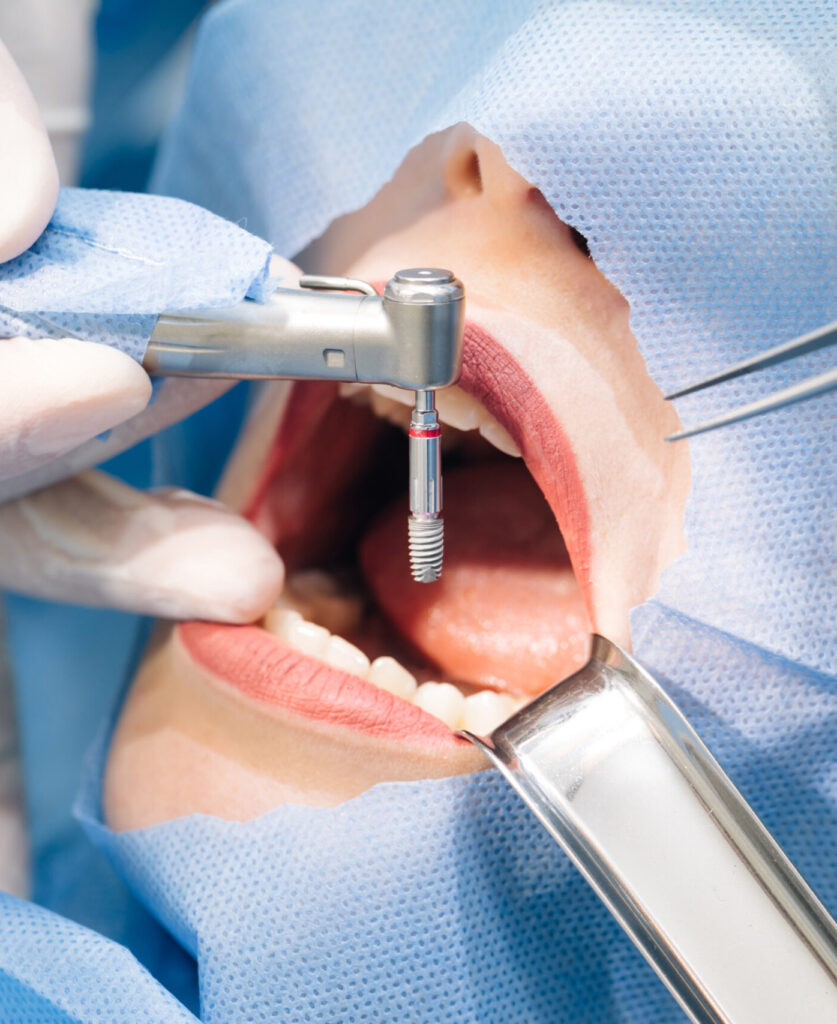
If, like many others, you feel implant dentistry in Reno is the choice for you, we ask you undergo a dental/radiographic examination and health history. During these consultation visits, your specific needs and considerations will be addressed by either Dr. Prince and Dr. Papez-Berg, or by an Oral and Maxillofacial Surgeon referred by our practice. Your questions and concerns about the dental implant process are important to us, and our team will work with you very closely to help make your procedure a success.
White Pine Family Dental offers multiple implant solutions to match your specific tooth loss situation:
Not sure which type is right for you? Our restorative dentistry team will evaluate your jawbone health, gum condition, and tooth loss pattern at your consultation to recommend the most appropriate option.
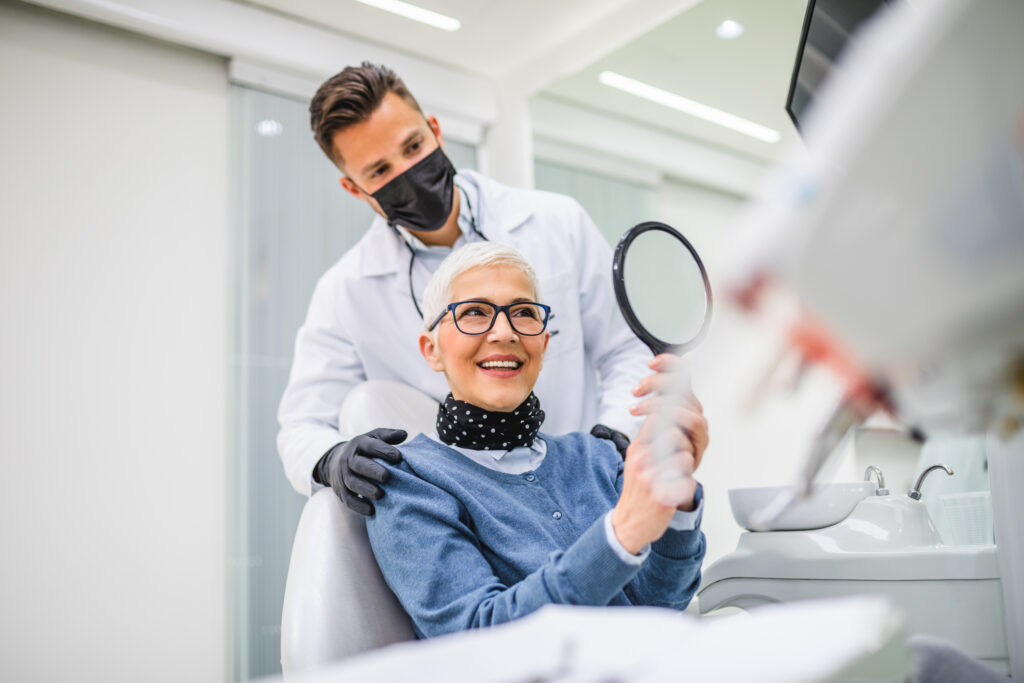
Your consultation is the most important step in the implant process. It’s where your dentist evaluates your eligibility, takes 3D diagnostic imaging of your jaw, reviews your dental and medical history, and creates a personalized treatment plan.
To get the most out of your consultation at White Pine Family Dental, come prepared with:
Most consultations take about 60 minutes. By the end, you’ll have a clear picture of your treatment timeline, cost estimate, and what the implant process looks like for your specific situation. Schedule your consultation today — our Reno team is ready to help.

According to the Cleveland Clinic, dental bone grafting can help replace missing and lost bone in your jaw. The bone graft helps the titanium post portion of your implant stay stable in your oral cavity. However, bone loss can negatively impact your oral health, so bone grafting before getting an implant can prevent complications.
If you are getting a consultation for dental implants, you may not know ahead of time you need a bone graft. However, if you’ve been told by a dental provider you have weak or receding bones in your oral cavity, especially in the jaw bone, you will likely need a bone graft. Bone grafting may add a couple of months to your dental implant timeline, but the long-term results are always worth it and much more stable than the alternative.

Patients with severe gum disease, or even mild gum disease, may need to undergo treatment before getting their implants. This is because opening up access to the bone and gums may allow bacteria to move into places won’t be easy to access after your implant is placed. Listen to your dentist’s recommendations during the dental implant process in Reno to prevent complications and unnecessary pain or discomfort.

Dental implants are the only tooth replacement option that addresses the root cause of tooth loss — not just the cosmetic gap. Here’s what sets them apart:
Patients consistently report that dental implants significantly improve their quality of life, from greater confidence in social situations to the freedom to eat without hesitation.
White Pine Family Dental has served Reno for 30+ years. Get a full cost estimate and treatment timeline at your consultation — no surprises.
At White Pine Family Dental, we understand that choosing dental implants is a significant investment — in your smile, your health, and your confidence. Here’s why Reno families trust us for implant dentistry:
Ready to take the first step? Contact our Reno dental office to schedule your dental implant consultation. We’ll take 3D diagnostic imaging, review your oral health history, and walk you through exactly what to expect — including a clear cost estimate — before any treatment begins.

Dental implants have a 95-97% success rate for healthy patients with good oral hygiene, and the titanium post can last a lifetime when properly maintained. The crown on top typically needs replacement every 10-15 years from normal wear. Long-term studies show 97% of implants survive at 10 years and 75-88% remain functional at 20 years. Success depends on overall health, bone density, smoking status, oral hygiene, location in mouth, and whether bone grafting was needed. Implants fail most commonly during the first year due to failed bone fusion, infection, or insufficient bone support. With proper care—excellent hygiene, regular checkups, no smoking, and wearing a night guard if you grind teeth—implants can last a lifetime. White Pine Family Dental carefully evaluates candidates to maximize success.
A single dental implant costs $3,000-$6,000 on average, including titanium post, abutment, and porcelain crown. Cost breakdown: implant surgery ($1,500-$2,500), abutment ($300-$500), and crown ($1,000-$3,000). Additional procedures may include bone grafting ($500-$2,000), sinus lift ($1,500-$3,000), extraction ($75-$650), and CT scan ($200-$600). Full-mouth restoration with implant-supported dentures ranges $20,000-$45,000 per arch. Most insurance covers 50% if medically necessary, up to annual maximum ($1,000-$2,000), though many plans exclude implants. Medicare doesn’t cover implants. Despite high upfront costs, implants may be most cost-effective long-term, lasting 25+ years versus bridges requiring replacement every 10-15 years. White Pine Family Dental offers financing options—call (775) 871-1186.
The complete implant process takes 3-9 months from start to finish, varying based on healing and whether bone grafting is needed. Process includes: consultation and planning (1 visit), tooth extraction if necessary (allow 2-3 months healing or immediate placement), bone grafting if needed (3-6 months healing), implant surgery (1-2 hours placing titanium post), osseointegration (3-6 months for bone fusion—critical healing period), abutment placement (30-60 minutes), and crown placement (2-3 weeks later). Total appointments: 6-10 visits over several months. Same-day implants exist but aren’t suitable for everyone. Each phase is important for long-term success. Contact White Pine Family Dental to learn your specific timeline and what to expect at each stage.
Implant surgery involves less pain than most patients expect—many report it’s less painful than tooth extraction. During surgery, local anesthesia or IV sedation ensures you feel no pain, though you may feel pressure. Post-surgery discomfort is typically mild to moderate, manageable with ibuprofen or prescribed medication, peaking within 24-48 hours then improving. Common experiences include swelling (peaks day 2-3, resolves within week), minor bleeding first 24 hours, bruising, jaw stiffness, and temperature sensitivity—all normal and temporary. Days 1-3 involve most discomfort, days 4-7 show significant improvement, weeks 2-4 bring complete soft tissue healing, and months 3-6 involve bone fusion you won’t feel. Most patients return to work within 1-3 days. Contact White Pine Family Dental immediately if experiencing severe worsening pain after day 3, fever over 101°F, excessive swelling, or pus.
Ideal candidates have sufficient jawbone density, healthy gums free of periodontal disease, good overall health, non-smoking status or willingness to quit, commitment to excellent oral hygiene, and realistic expectations. Patients who may not be good candidates include heavy smokers (doubles failure risk), uncontrolled diabetics, those with active gum disease, insufficient bone without willingness for grafting, patients taking bisphosphonates or immunosuppressants, those with severe untreated grinding, patients undergoing head/neck radiation, and individuals with certain autoimmune conditions. Age alone doesn’t disqualify—implants successfully placed from late teens through 90s. Children under 18 whose jaws are developing aren’t candidates yet. Patients with controlled health conditions can often receive implants with proper medical clearance. Comprehensive evaluation at White Pine Family Dental determines your candidacy and addresses preparatory treatments needed.
Implants offer significant advantages over traditional options. Versus bridges: don’t require altering adjacent healthy teeth, prevent bone loss through jaw stimulation, last significantly longer (25+ years vs. 10-15), easier to clean (floss normally), and preserve long-term oral health though cost more initially. Versus dentures: feel and function like natural teeth (dentures reduce chewing efficiency 50-70%), prevent jawbone deterioration and facial sagging, require no adhesives or removal, allow eating any foods, don’t cover palate improving taste and speech, and only crown needs replacement every 10-15 years. Additional benefits include highest patient satisfaction, no food restrictions, preserved facial structure, no impact on adjacent teeth, and most natural feel. Disadvantages include highest upfront cost, surgery requirement, extended timeline, and small failure risk. Schedule consultation at White Pine Family Dental for personalized comparison.
While implants have 95-97% success rates, failures can occur—most commonly within the first year during bone fusion but occasionally years later. Early failure causes include insufficient bone density, infection, smoking, poor surgical technique, excessive force before healing, systemic health issues, and failed bone grafts. Late failure causes include peri-implantitis from poor hygiene (inflammation and bone loss around implant), excessive bite forces from grinding, crown damage, cement failure, or systemic health changes. Warning signs requiring immediate attention: persistent pain around implant, swelling or redness, implant feels loose, difficulty chewing, gums receding exposing metal, pus or bleeding, and bad taste or odor. Early intervention can sometimes save failing implants through deep cleaning, antibiotics, or bone grafting. Prevent failure through impeccable hygiene, no smoking, regular checkups, night guard if grinding, and addressing health issues. Contact White Pine Family Dental immediately with warning signs.
Monday – Thursday: 8:00 AM – 5:00 PM
Friday – Saturday: 8:00 AM – 3:30 PM
Phone: (775) 825-6655
Fax: (775) 825-8691