

Picture this: you’re enjoying your favorite meal when suddenly you feel a sharp pain shoot through your tooth. After visiting your dentist, you learn you need dental work, but now you’re faced with a choice between a filling and a crown. The decision between these two restorative dentistry treatments depends on several key factors, including the extent of damage, the tooth’s location, and your long-term oral health goals.
At White Pine Family Dental, our experienced team has been guiding Reno patients through these important dental decisions for over 30 years. We understand choosing the right treatment can feel overwhelming, which is why we take the time to explain your options thoroughly and help you make the best choice for your unique situation.
Understanding the Difference Between Fillings and Crowns
Dental fillings work best for smaller areas of decay or damage. Think of a filling as a patch that repairs a specific spot on your tooth. Dentists remove the decayed portion and fill the space with materials like composite resin, amalgam, or porcelain. This process preserves most of your natural tooth structure while addressing the problem area.
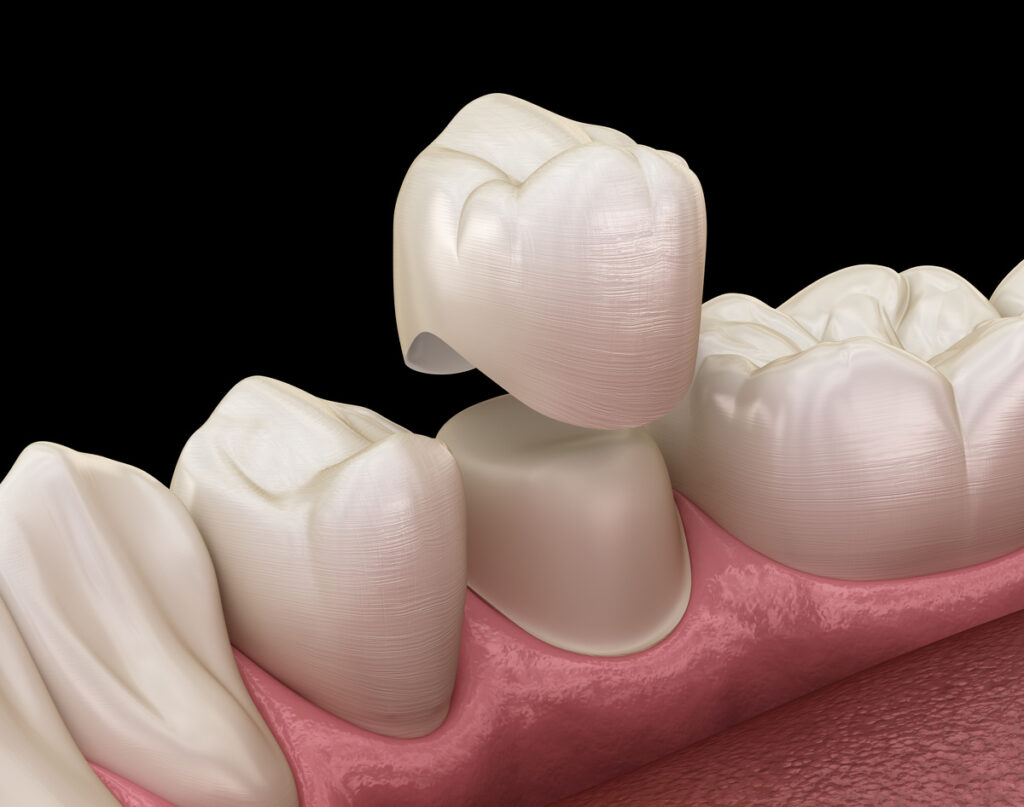
Dental crowns, on the other hand, function like protective caps that cover the entire visible portion of your tooth above the gum line. When damage extends beyond what a filling can effectively address, a crown provides comprehensive protection and restoration. The crown becomes the new chewing surface of your tooth while safeguarding the remaining natural structure underneath.
When Do Dental Crowns Become Necessary?
Several situations call for crown treatment rather than simple fillings. Extensive decay affects your choice significantly. When cavities cover large portions of your tooth or reach deep into the structure, fillings may not provide adequate strength. A crown distributes biting forces evenly across the entire tooth, preventing future fractures.
Cracked or broken teeth often require crowns for proper restoration. Even small cracks can worsen over time, especially in back teeth that endure heavy chewing forces. Crowns hold the remaining tooth structure together, preventing further damage and potential tooth loss.
Previous large fillings sometimes need crown upgrades. Teeth with substantial existing fillings may develop additional decay around the filling edges or experience structural weakness. Rather than placing an even larger filling, crowns offer superior long-term stability. Bacterial infections can reach the tooth’s pulp through decay, periodontal disease, or cracks, potentially requiring crown protection after root canal treatment.
Factors That Influence Your Treatment Choice
Your tooth’s location plays a crucial role in treatment selection. Back teeth endure significantly more pressure during chewing and grinding, making them prime candidates for crown protection when damage occurs. Front teeth may successfully receive fillings for smaller cosmetic issues, though extensive damage still requires crowns.
The amount of remaining healthy tooth structure guides treatment decisions. Dentists follow the general rule that teeth with more than half their structure intact may receive fillings, while those with less remaining structure benefit from crown protection. Your dentist will assess each situation individually to determine the most appropriate approach.
Your oral habits and lifestyle considerations matter too. People who grind their teeth at night, chew ice, or have particularly hard diets may benefit from crown durability over filling repairs. Crowns typically last 10 to 15 years with proper care, while fillings may need replacement more frequently depending on their size and location.
Making the Right Choice for Your Smile
Cost considerations often influence treatment decisions, but focusing solely on immediate expenses can lead to higher long-term costs. While fillings cost less initially, they may require replacement sooner than crowns. Multiple filling replacements over time often exceed the cost of a single crown that lasts much longer.
Your dentist will evaluate several factors during your consultation:
- The extent and location of damage or decay
- Your bite patterns and jaw alignment
- Overall oral health and risk factors
- Long-term treatment goals and preferences
- Insurance coverage and payment options
These assessments help determine whether conservative filling treatment or comprehensive crown restoration serves your needs best.
Experience Comprehensive Care at White Pine Family Dental
Choosing between fillings and crowns requires careful evaluation by experienced dental professionals who understand your unique needs. Our family-owned practice has built lasting relationships with Reno families by providing personalized care and taking time to explain treatment options clearly. We combine decades of experience with modern technology to deliver exceptional results.
Whether you need a simple filling or comprehensive crown restoration, our team provides comfortable, professional care in a welcoming environment. We work with most major dental insurance plans and offer flexible payment options to make your treatment accessible. Contact us today at (775) 825-6655 or reach out through our contact form to schedule your consultation and learn more about your restorative dentistry options.