
Restorative & Cosmetic Dentistry in Reno, Nevada
A tooth that is cracked can be painful. It also can lead to disease of the tooth.
It can be hard for you to tell if a tooth is cracked. If you have pain, you may not be able to tell which tooth hurts or even whether the pain comes from the top or bottom of your mouth. Cracks may be invisible to the eye and may not even show on an x-ray. And sometimes you won’t have any pain or sensitivity at all; your dentist will discover it during your exam.
If you are having symptoms, you can help your dentist find the cracked tooth by sharing some information:
A tooth may crack for many reasons, such as:
Pulp is the soft tissue inside the center of your tooth and contains nerves and blood vessels. If the crack reaches the pulp, your tooth may be sensitive to hot and cold. Sometimes, a crack in the enamel of your tooth goes all the way down to the nerve pulp. This type of cracked tooth may hurt when you bite down or when you stop biting. The crack may be too small to see but is large enough for the pulp inside your tooth to become irritated.
When your tooth is cracked, the pulp sometimes becomes infected. If this happens, treatment to remove the pulp, also known as a root canal, may be needed to save your tooth.

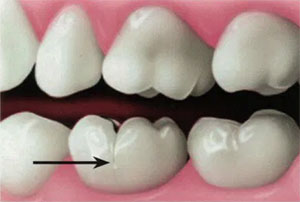
Treatment depends on the size, location and direction of the crack, as well as your symptoms. It is possible that your dentist will recommend no treatment at all, since tiny cracks are common and usually do not cause problems. You and your dentist can talk about the types of treatments for your tooth and decide on the treatment that is right for you.
Regular dental checkups are important, because they let your dentist find and treat problems at an early stage. A cracked tooth can become a bigger problem if left untreated. If you think you may have a cracked tooth, visit your dentist.
The most common symptom of a cracked tooth is sharp pain when biting down or releasing your bite during chewing. You may experience sudden sensitivity to hot, cold, or sweet foods and beverages that comes and goes rather than being constant. Some patients notice pain that’s difficult to pinpoint or seems to move around their mouth. The gum around affected tooth might appear swollen or tender. Interestingly, not all cracked teeth produce symptoms initially—some cracks remain painless until they worsen or bacteria enter the crack causing infection. If you experience any of these signs, especially intermittent pain when chewing, contact White Pine Family Dental immediately at (775) 825-6655. Early diagnosis and treatment prevent the crack from worsening and help us save your tooth.
Cracked tooth repair costs vary significantly based on crack severity and required treatment, ranging from $200 to $5,000. Minor cosmetic repairs using dental bonding cost approximately $200-$600. Dental crowns, needed for more extensive cracks, range from $800-$3,000 depending on material. If crack extends into tooth’s pulp, you’ll need a root canal ($500-$1,500) plus crown for protection. Severe cracks requiring tooth extraction and replacement with dental implant can cost $3,000-$5,000. Most dental insurance plans cover medically necessary cracked tooth treatments, significantly reducing your out-of-pocket costs. At White Pine Family Dental, we’ll thoroughly examine your tooth, explain your treatment options with associated costs, and help you find affordable solution saving your tooth. Call (775) 825-6655 for consultation.
No, a cracked tooth cannot heal itself because tooth enamel doesn’t regenerate like other body tissues. Once a tooth cracks, the damage is permanent and will only worsen without professional treatment. Unlike broken bone that can mend, teeth lack living cells necessary for self-repair. Ignoring cracked tooth allows bacteria to enter crack, leading to decay, infection, and potential tooth loss. The crack can also continue spreading, eventually splitting tooth beyond repair. However, prompt dental treatment can save your tooth and prevent complications. Depending on crack severity, we can repair your tooth using bonding, veneers, crowns, or root canal therapy. The sooner you seek treatment after discovering crack, the better your chances of preserving your natural tooth with less invasive, less expensive treatment. Contact White Pine Family Dental immediately.
Teeth crack for numerous reasons, with age being significant factor—most cracks occur in people over 50 as teeth naturally weaken. Biting down on hard objects like ice, hard candy, popcorn kernels, or bone fragments commonly causes cracks. Teeth grinding (bruxism), especially during sleep, places enormous pressure on teeth eventually leading to fractures. Large dental fillings weaken tooth structure, making those teeth more susceptible to cracking. Physical trauma from falls, sports injuries, or accidents can crack teeth instantly. Previous root canal treatment sometimes leaves teeth more brittle. Sudden temperature changes, like drinking hot coffee followed immediately by ice water, can create stress cracks. Identifying your risk factors helps us recommend preventive measures like night guards for grinding or avoiding risky chewing habits. Schedule evaluation at White Pine Family Dental to discuss prevention strategies.
A cracked tooth should be treated as dental emergency requiring prompt attention, though urgency level depends on your symptoms. If you experience severe pain, visible tooth fragments, heavy bleeding, or swelling, contact us immediately for same-day emergency care. Even without dramatic symptoms, cracks rarely improve on their own and worsen over time, potentially leading to infections requiring more extensive treatment. Early intervention often means simpler, less expensive repairs and better chances of saving your tooth. Until your appointment, avoid chewing on affected side, rinse with warm salt water, and take over-the-counter pain medication if needed. Apply ice packs to reduce swelling. At White Pine Family Dental, we prioritize cracked tooth cases and make every effort to see you quickly to prevent complications and relieve your discomfort. Call (775) 825-6655 immediately for emergency dental care.
"*" indicates required fields